
Why We're Building a Fairer DOOH Network
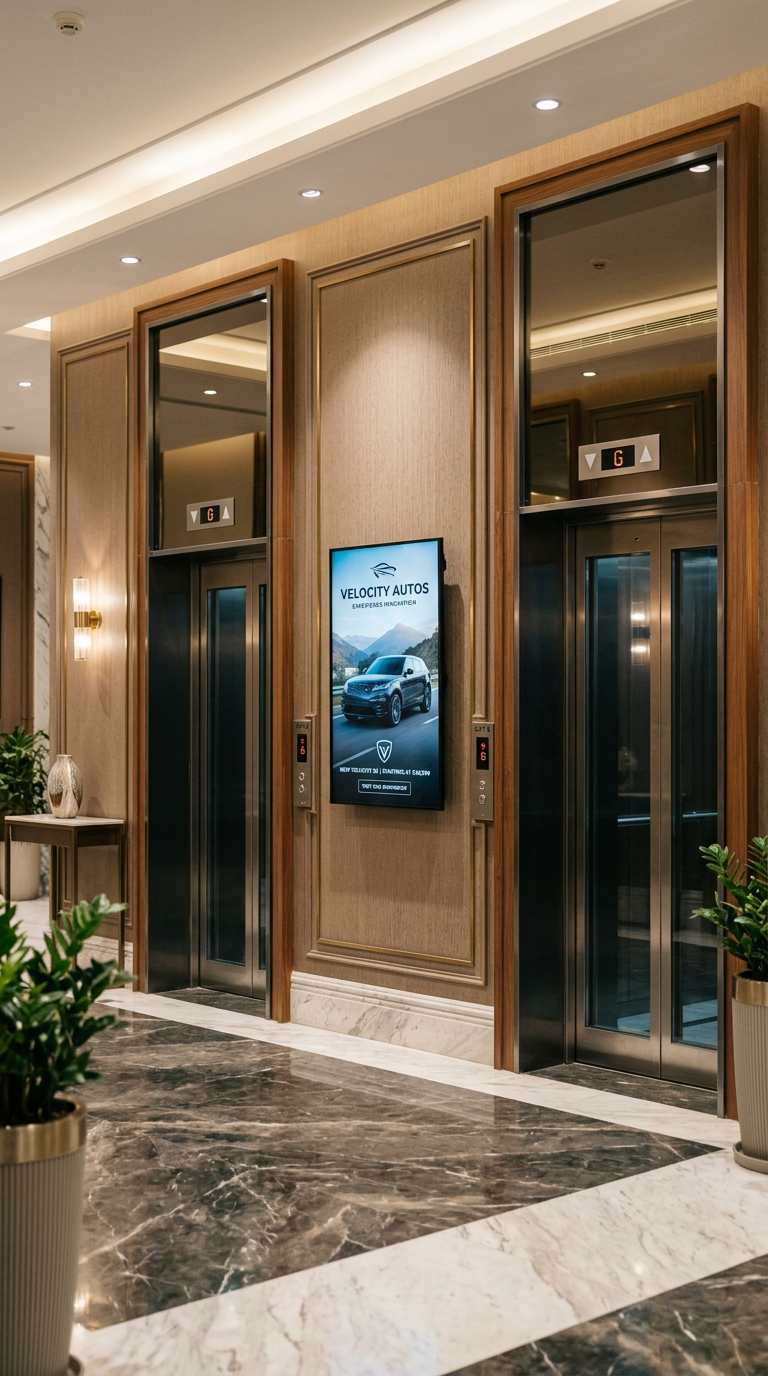
The residential Digital Out-of-Home advertising market has grown rapidly. Screens are appearing in elevator lobbies, clubhouses, reception areas, parking zones, and other common spaces across residential communities.
But the economics behind those screens have remained surprisingly difficult to understand.
A society provides access to a valuable audience. A media operator installs and operates the screens. Advertisers pay for exposure. Yet, in many cases, the society has little visibility into how much advertising revenue is actually generated from its premises, how the inventory is priced, or whether the compensation it receives reflects the value of its audience.
At AdX, we believe this can be done differently.
The Problem with the Traditional Model
The traditional residential DOOH model often begins with a long-term agreement between a society and a media operator.
The operator typically takes responsibility for installing and maintaining the screens. In return, the society may receive a fixed monthly payment, free screen installation, or some other predetermined benefit.
On the surface, this sounds simple.
The problem is that advertising revenue is not fixed.
If an advertiser spends more, the value of the inventory increases. If a screen gets more impressions, its commercial value increases. If demand in a particular location grows, the economics change.
Yet the society's compensation may remain exactly the same.
This creates an imbalance.
The party providing access to the audience may have limited visibility into the actual commercial value being generated from that audience.
We Think the Inventory Should Be Measurable
The first step towards fairness is measurement.
A DOOH screen is ultimately an advertising medium. Advertisers should be able to understand what they are buying.
- How many screens are operational
- How many ad plays are delivered
- How long each advertisement plays
- Which locations received the advertisement
- What rate was applied
- What portion of the advertising value is attributable to each participating society
The more measurable the inventory becomes, the less room there is for opaque economics.
A Society Should Participate in the Upside
We believe societies should not simply be treated as locations where screens happen to exist.
They are contributing the most important asset in the model: access to a defined residential audience.
That contribution has economic value.
Instead of locking that value into an arbitrary fixed payment, a fairer model should allow societies to participate in the advertising activity generated through their screens.
If advertising demand grows, the ecosystem should benefit.
If inventory is underutilized, everyone should be able to see that reality.
The economics should follow the actual activity.
Advertisers Deserve Transparency Too
Fairness is not only about societies.
Advertisers also deserve a clearer product.
A brand buying residential DOOH should know what it is paying for.
The industry should move away from vague descriptions such as "one month of branding" and towards measurable advertising units.
An advertiser should be able to understand the relationship between its budget and the advertising exposure delivered.
That makes planning easier, reporting stronger, and comparisons more meaningful.
Technology Makes This Possible
Digital screens make DOOH fundamentally different from traditional static outdoor media.
A digital screen can record whether it was operational. It can record when an advertisement was played. Campaigns can be centrally managed. Inventory can be allocated programmatically or through defined campaign rules.
This creates the foundation for a more accountable marketplace.
The objective is not to make advertising complicated.
It is to make the economics understandable.
We Are Not Trying to Hide the Numbers
We believe the opposite.
A healthier DOOH ecosystem should make the important numbers easier to understand.
How much advertising was delivered?
At what rate?
Where was it delivered?
How was the revenue calculated?
What did the society earn?
What did the advertiser receive?
These are not unreasonable questions. They are fundamental questions for any marketplace.
Fair Does Not Mean Everyone Gets the Same Amount
A fair network does not necessarily mean every participant receives an identical share.
Different locations have different audiences. Different screens have different traffic. Different campaigns have different requirements.
A premium location may legitimately be worth more than another.
The important thing is that the basis for the economics is defined, measurable, and visible.
Building a Network, Not Just Installing Screens
AdX is being built around this principle.
We want residential DOOH to function more like a transparent advertising network and less like a collection of opaque screen contracts.
That means creating a common framework where societies, advertisers, and network operators can participate with a clearer understanding of the value being exchanged.
The goal is simple:
Measure the inventory. Price it clearly. Deliver what was purchased. Share the value fairly.
We believe residential communities deserve a better DOOH model.
And we believe advertisers do too.